New book out: Diversity Leadership for Research Managers: A Practical uide
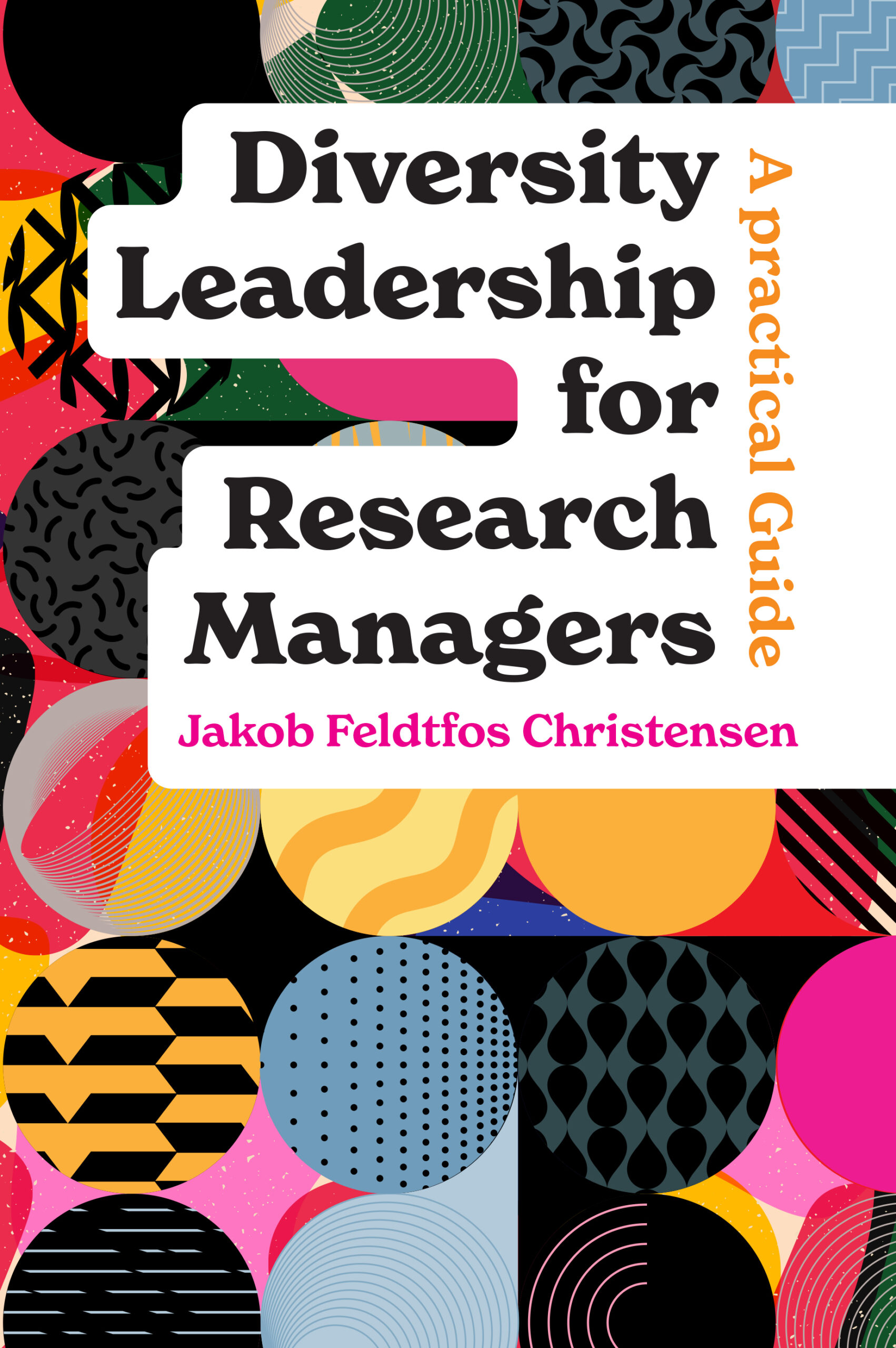
The book is out 12th May 2026 (e-book) and 2nd June 2026 (physical book) on Emerald Publishing
Diversity and inclusion in research are not HR challenges; they’re research management and governance challenges. Diversity Leadership for Research Managers is the first practical guide addressing diversity literacy specifically for research managers and administrators, wherever they work in the world.
The book explores why diversity and internationalisation are deeply intertwined, how to lead with cultural intelligence across the full research lifecycle, and how to build inclusive research support offices that drive real impact. It is both a strategic development tool and a daily reference, something you can read cover to cover or pull from the shelf when facing a specific challenge.
Written by Jakob Feldtfos Christensen, director of DIVERSIunity, and drawing on his work, the podcast and interviews with research managers from across the globe, this is a practical, pragmatic and honest guide for professionals who want to move the diversity agenda forward in research.
While aimed at research managers and administrators, the book is relevant for everybody in the research ecosystem involved in international research collaborations.
[Order the book here] (link coming soon)
Bring the book to life in your organisation
Jakob is available for keynotes at conferences, institutional events and professional networks — tailored to your audience, whether that’s research managers, university leadership or the broader research ecosystem.
DIVERSIunity has also developed a series of workshops linked directly to the book, giving your team practical tools to develop diversity literacy and translate it into action.
Get in touch to discuss keynotes and workshops.
Training and workshops related to the book
- Building Divesity Leadership in Research Management
- Diversity Literacy 101: A Foundation for Research Managers
- Building an Inclusive Research Support Office
- Diversity in Research Proposals: The FLOW Model
- Managing Diversity in International Research Collaborations
- Measuring What Matters: Monitoring and Evaluation of Diversity Initiatives
- Diversity Literacy for Research Funders: From Requirements to Real Impact
- Diversity as Strategy for Funders: Building a Diversity-Intelligent Funding Portfolio
- Future-Proofing: Diversity Leadership in an Uncertain World
Building Divesity Leadership in Research Management
For anyone working in or around the research ecosystem.
Duration: 3–4 hours
Diversity literacy, the ability to understand, navigate and act on diversity in a knowledgeable, reflective and practical way, is not a personality trait or a political stance. It is a professional skill, and like any skill, it can be built deliberately. This course introduces the foundational concepts, vocabulary and frameworks that make it possible to talk about diversity clearly, work with it consistently and lead with it authentically. Unlike more specialised courses in this portfolio, this one is designed for the broadest possible audience: research managers, researchers, university leadership and anyone in the research ecosystem who wants to move from good intentions to genuine competence. It is structured around three layers: understanding, navigating and acting. We approach diversity literacy as a lifelong learning process, not a one-time certification.
By the end of this course, you will be able to:
- Explain core concepts, diversity, equity, inclusion, belonging and intersectionality, clearly and confidently in your own professional context.
- Recognise the difference between compliance-based approaches and genuine diversity leadership.
- Apply a diversity lens to your own role and daily work, regardless of your title or seniority
- Navigate the complexity of diversity without paralysis, using a coherent and context-sensitive framework.
- Identify your next steps for building diversity literacy as a continuous professional practice.
Diversity Literacy 101: A Foundation for Research Managers
For research managers and administrators new to the field
Duration: 3–4 hours
Research managers occupy a unique position in the research ecosystem: they shape proposals, support researchers, influence policy and bridge the gap between institutional strategy and daily practice. Yet most have received little or no formal training in diversity leadership. This course is the starting point. It introduces the essential vocabulary and frameworks for working with diversity in a research management context, explains why compliance alone is never enough, and gives participants their first practical tools for making a real difference, starting small, building confidence and developing the foundations of diversity literacy that all the more advanced courses in this portfolio build upon.
By the end of this course, you will be able to:
- Use a shared, precise vocabulary for discussing diversity, equity, inclusion and belonging in research management settings.
- Explain why internationalisation and diversity are deeply connected, and what that means for your work.
- Distinguish between a compliance mindset and a diversity leadership mindset, and articulate why it matters.
- Identify at least three concrete entry points for integrating diversity into your current role.
- Approach diversity as a skill to develop over time rather than a problem to solve once.
Building an Inclusive Research Support Office
For heads of research support offices and senior administrators
Duration: 4–5 hours
A research support office can’t credibly promote diversity in research if it does not practice it internally. This course helps RSO leaders think systematically about how diversity runs through every dimension of their work, from staffing and recruitment to proposal support, internal culture, communication and data. Using our logic model as a practical planning tool, participants map their office against a comprehensive framework, identify where they are already strong and where gaps exist, and leave with a concrete starting plan tailored to their institutional context. The emphasis throughout is on embedding diversity into governance and daily operations, not treating it as a stand-alone initiative that sits outside the real work.
By the end of this course, you will be able to:
- Apply the logic model to analyse and plan diversity work across all key dimensions of your research support office.
- Set realistic, meaningful diversity goals that align with your institutional context and purpose.
- Identify internal resources policies, networks, and expertise that you can mobilise without starting from scratch.
- Design an initial roadmap for embedding diversity into your office’s daily governance and practice.
- Lead by example in a way that builds credibility with both researchers and institutional leadership.
Diversity in Research Proposals: The FLOW Model
For pre-award research managers and proposal development specialists
Duration: 1½–2½ hours
Diversity in research proposals is too often treated as a box-ticking exercise, something to address in the ethics section and forget about. This course offers a different starting point: diversity as a genuine driver of research quality. Built around the FLOW model, it takes participants step by step through integrating diversity into proposal development, from defining your own goals and assessing internal resources, through the building blocks of diversity in research design, to the application form itself and what you learn for next time. The result is a practical, replicable approach that helps research managers go beyond what funders require, and helps their researchers do the same.
By the end of this course, you will be able to:
- Use the FLOW model to structure a diversity-integrated approach to research proposal development.
- Identify the internal resources and building blocks available to support diversity in a specific proposal context.
- Translate diversity goals into concrete, well-placed content across the application form.
- Move beyond funder requirements to strengthen proposals through genuine diversity integration.
- Support researchers in understanding diversity as a contributor to research excellence, not an administrative burden.
Managing Diversity in International Research Collaborations
For post-award managers, project managers and international collaboration specialists
Duration: 3–4 hours
International research collaboration is one of the most rewarding but also most complex arenas for diversity work. Different cultural norms, legal frameworks, power dynamics and histories all converge in a single consortium, and the research manager is often the person holding it together. This course draws on Cultural Intelligence as a practical framework for navigating that complexity: building trust across cultures, managing conflict constructively, protecting under-represented researchers within international projects and fostering inclusive environments where different perspectives can genuinely contribute. It also addresses how to anticipate and respond to resistance in cross-cultural settings, one of the most demanding challenges research managers face in international work.
By the end of this course, you will be able to:
- Apply Cultural Intelligence principles to build trust and foster inclusion in international research teams and consortia.
- Navigate conflicts arising from different cultural norms, values and expectations in a constructive and principled way.
- Identify risks for underrepresented researchers in international collaborations and take concrete steps to mitigate them.
- Communicate about diversity across cultural and institutional boundaries in ways that invite engagement rather than defensiveness.
- Adapt your approach to diversity leadership to different international contexts without abandoning your core principles.
Measuring What Matters: Monitoring and Evaluation of Diversity Initiatives
For experienced research managers, policy advisers and institutional leaders
Duration: 1½–2½ hours
One of the most persistent challenges in diversity work is demonstrating that what you are doing actually makes a difference, to your team, to your leadership, to your funders. This course tackles that challenge head-on. It covers the design of meaningful indicators, the responsible collection and use of sensitive data, the setting of realistic targets and the communication of results in ways that sustain momentum rather than generate defensiveness. It is honest about the limits of measurement, there is no clean metric for belonging, and progress is rarely linear, while giving participants a rigorous framework for continuous improvement that serves both accountability and learning.
By the end of this course, you will be able to:
- Design a monitoring and evaluation framework for a diversity initiative, from indicators through to impact.
- Collect and handle sensitive diversity data responsibly, in line with both legal requirements and ethical best practice.
- Set realistic, context-aware targets that motivate progress without setting up false expectations.
- Communicate evaluation findings to institutional leadership and funders in a compelling and credible way.
- Use evaluation not just for accountability but as a genuine tool for learning and adapting your approach over time.
Diversity Literacy for Research Funders: From Requirements to Real Impact
For programme officers, grant managers and policy staff at public and private research funding bodies
Duration: 4–5 hours
Research funders, whether national agencies, international bodies or private foundations, shape the diversity of research at a systemic level. The requirements written into calls, the criteria used to evaluate proposals, the way funded projects are monitored and managed: all of these send powerful signals about what diversity means in practice and whether it is taken seriously. Yet the staff responsible for these decisions often have limited training in diversity literacy, and the gap between policy intent and real-world impact can be wide. This course helps programme officers and grant managers, whether they work in a heavily regulated public setting or a more flexible private one, develop the knowledge and practical tools to use their institutional position effectively. The emphasis throughout is on moving from requirements to genuine impact: designing processes that support real integration rather than compliance on paper.
By the end of this course, you will be able to:
- Explain how diversity requirements in funding calls translate, or fail to translate, into research practice, and identify where the gap typically opens up.
- Design or revise call requirements and evaluation criteria that support genuine diversity integration rather than box-ticking.
- Evaluate diversity content in research proposals using consistent, well-grounded and fair criteria.
- Identify how your own institutional frameworks and assumptions shape which groups are systematically advantaged or disadvantaged in funding processes.
- Take concrete steps to embed diversity literacy into your team’s standard ways of working, whether your starting point is regulatory compliance or strategic ambition.
Diversity as Strategy for Funders: Building a Diversity-Intelligent Funding Portfolio
For senior programme staff, portfolio managers and leadership at public and private research funding bodies
Duration: 6-7 hours
Diversity is not only a compliance obligation for research funders; it is a strategic lever for research quality, societal relevance and long-term credibility. This course is for funder staff who want to move beyond meeting requirements and think seriously about how diversity shapes the research they fund, the communities they engage and the impact they generate. Whether you work within a regulatory framework like Horizon Europe or with the greater discretion that comes with private or philanthropic funding, the strategic questions are fundamentally the same: what kind of research ecosystem do we want to support, and are our funding priorities, processes and relationships actually producing it? The course addresses diversity across the full strategic cycle, from portfolio priorities and call design to grantee relationships, risk management and outcome measurement, and is honest about the specific pitfalls that come with positional power, including tokenism, short-termism and the difference between diversity that is performative and diversity that is genuinely transformative.
By the end of this course, you will be able to:
- Articulate a clear and defensible strategic rationale for diversity in your funding portfolio, grounded in research quality and societal impact rather than compliance alone.
- Analyse your current funding portfolio through a diversity lens and identify where strategic gaps or unintended exclusions exist.
- Integrate diversity considerations coherently across the full funding cycle, from strategic priorities through to grantee relationships and outcome measurement.
- Identify and actively mitigate the risks of tokenism, short-termism and superficial inclusion that are particularly acute when funders hold significant discretionary power.
- Build relationships with under-represented research communities and grantees that are grounded in trust, genuine partnership and long-term commitment.
Future-Proofing: Diversity Leadership in an Uncertain World
For experienced practitioners across all roles in the research ecosystem
Duration: 3–4 hours
The political, technological and institutional landscape surrounding diversity work is shifting faster than most organisations can keep up with. Political polarisation has made diversity a contested topic in many countries. Artificial intelligence is reshaping research management while introducing new risks for underrepresented groups. Open science is creating both opportunities and vulnerabilities. International collaboration is becoming simultaneously more important and more precarious. This course does not offer reassurance; it offers orientation. Drawing on emerging trends across the global research landscape, it equips experienced practitioners to stay grounded in their values under pressure, make strategic decisions amid real uncertainty, and lead with authenticity in a volatile environment. This is the capstone course in the DIVERSIunity portfolio, and it assumes that participants already have a foundation in diversity literacy and leadership.
By the end of this course, you will be able to:
- Analyse the key political, technological and institutional forces currently reshaping diversity work in research, and anticipate how they may develop.
- Articulate your own values-based position as a diversity leader in a way that can withstand political pressure and institutional uncertainty.
- Navigate the specific tensions between open science, data protection and the safety of underrepresented researchers.
- Make strategic decisions about diversity priorities when resources are constrained and the environment is unpredictable.
- Lead authentically and build trust with underrepresented colleagues and research communities in a climate of heightened insecurity.